Anna Werner · 24 October 2026
Examining Data Synchronization Challenges Across Distributed Testing Layers in Virtualized SaaS Infrastructures During Incremental Code Integrations
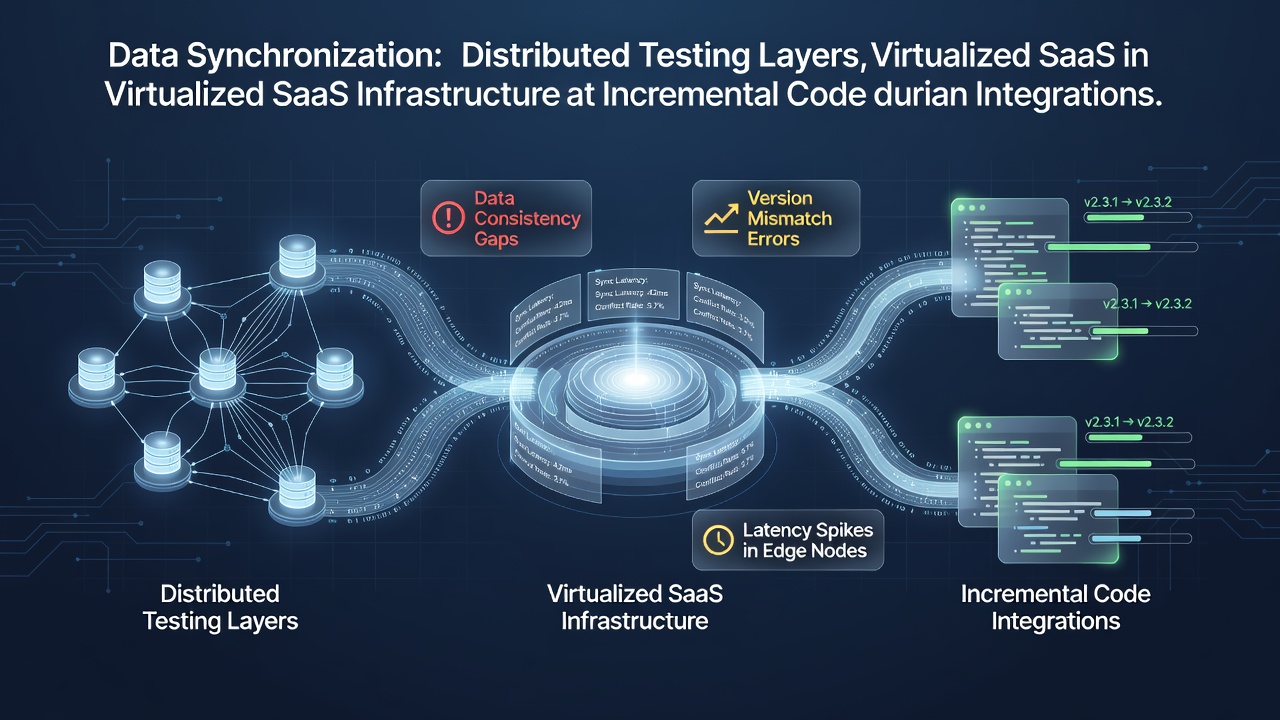
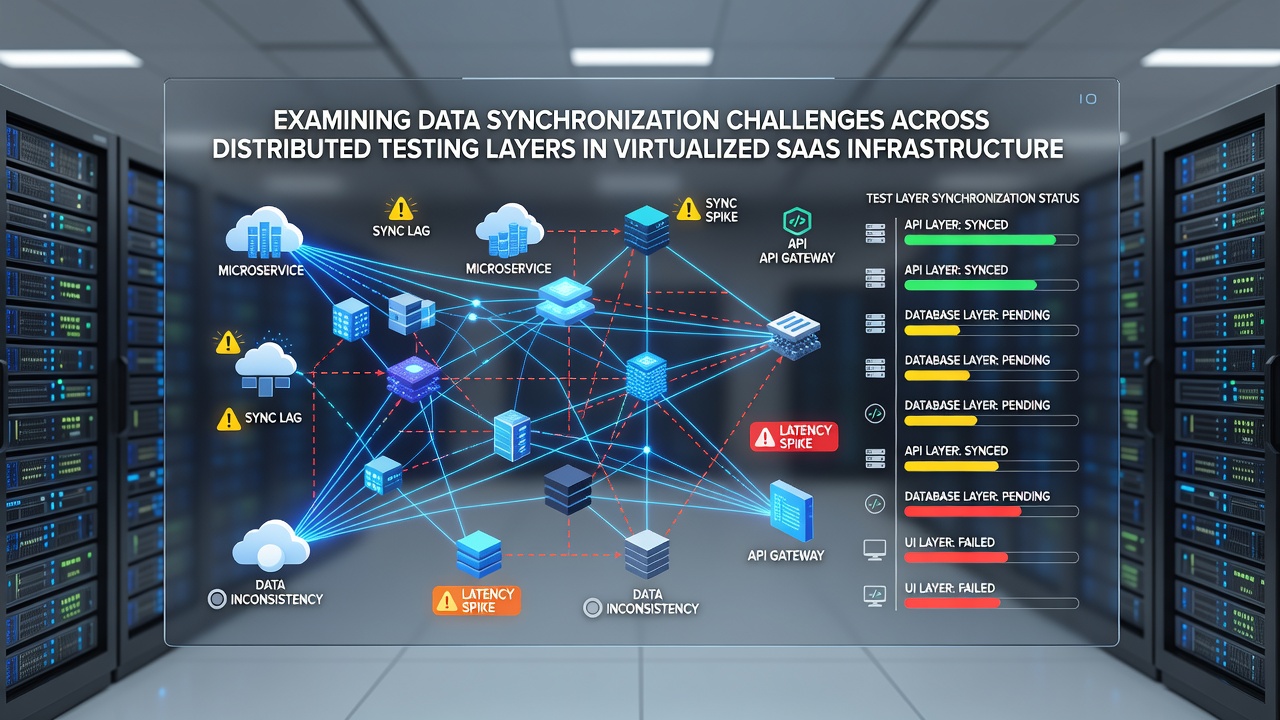
Virtualized SaaS infrastructures rely on multiple layers of testing environments that operate across geographically dispersed nodes, and incremental code integrations introduce frequent updates that must propagate without disrupting data consistency. Researchers have documented how these updates often create timing mismatches when test data from one layer fails to align with changes in another, especially in setups where virtualization abstracts underlying hardware resources. Data indicates that synchronization lags become more pronounced during continuous integration cycles because each code commit triggers parallel test executions that draw from shared yet independently managed datasets.
Core Components of Virtualized SaaS Testing Environments
Virtualized SaaS platforms separate application logic from physical infrastructure through hypervisors and container orchestration tools, which allows testing layers to scale dynamically yet introduces dependencies on network latency and storage replication. Observers note that testing layers typically include unit, integration, performance, and security validation stages, each running in isolated virtual instances that pull configuration and state information from centralized repositories. When incremental integrations occur, code changes must reach all layers simultaneously, but propagation delays can leave some instances operating on outdated schemas or cached records.
Studies from academic institutions show that virtualization adds an extra abstraction level where memory mapping and disk I/O operations must stay coordinated across nodes. Those who've examined production logs report that even minor discrepancies in timestamp resolution between virtual machines can cascade into failed test assertions during high-frequency deployment windows.
Mechanics of Data Synchronization in Distributed Layers
Distributed testing layers exchange state through message queues, database replication protocols, and eventual consistency models, all of which must accommodate the pace of incremental code integrations. According to findings published by the National Institute of Standards and Technology, replication lag in virtualized environments often exceeds acceptable thresholds when network partitions coincide with deployment events. Engineers managing these systems observe that conflict resolution mechanisms, such as last-writer-wins or vector clocks, sometimes produce divergent test outcomes across layers when the same data record receives concurrent updates from different integration pipelines.
What's notable is how snapshot isolation techniques, while effective for single-node testing, struggle to maintain coherence when virtual instances span multiple availability zones. Research indicates that organizations deploying SaaS solutions in October 2026 encountered elevated error rates in automated regression suites precisely because synchronization services could not reconcile delta changes introduced by rapid commit streams.
Impact of Incremental Code Integrations on Testing Fidelity
Incremental code integrations deliver small, frequent updates that reduce risk compared with monolithic releases, yet they multiply the number of synchronization points that distributed testing layers must handle. Data from industry monitoring tools reveals that each integration can alter API contracts, database schemas, or caching rules, forcing test environments to refresh their working sets in near real time. When refresh operations lag, downstream layers execute against stale information, which generates false positives and negatives that obscure genuine defects.
Those tracking deployment telemetry note that virtualized infrastructures amplify this effect because live migration of test workloads can interrupt ongoing replication sessions. Reports compiled by the European Union Agency for Cybersecurity highlight cases where integration-triggered state divergence led to inconsistent security posture assessments across geographically separated test clusters.
Observed Patterns and Measurement Approaches
Telemetry collected from production SaaS environments shows recurring patterns where synchronization failures cluster around peak integration hours, typically aligned with developer time zones. Metrics such as replication lag, consistency window duration, and test result variance provide quantitative indicators that teams use to diagnose layer misalignment. Analysts have found that adding instrumentation at the hypervisor level helps surface discrepancies that application-layer logs miss, particularly when virtual network overlays introduce variable packet ordering.
One study released by a Canadian research consortium quantified how a 200-millisecond replication delay correlated with a 17 percent increase in test flakiness during periods of continuous integration activity. These measurements enable teams to set thresholds that trigger automated reconciliation jobs before full test suites complete.
Conclusion
Distributed testing layers in virtualized SaaS infrastructures face persistent data synchronization demands that intensify with each incremental code integration cycle. Evidence from standards bodies and academic sources demonstrates that addressing replication timing, conflict resolution, and telemetry visibility remains essential for maintaining test accuracy. Organizations continue to refine orchestration policies and monitoring practices to keep synchronization windows within operational tolerances as deployment frequencies rise.